
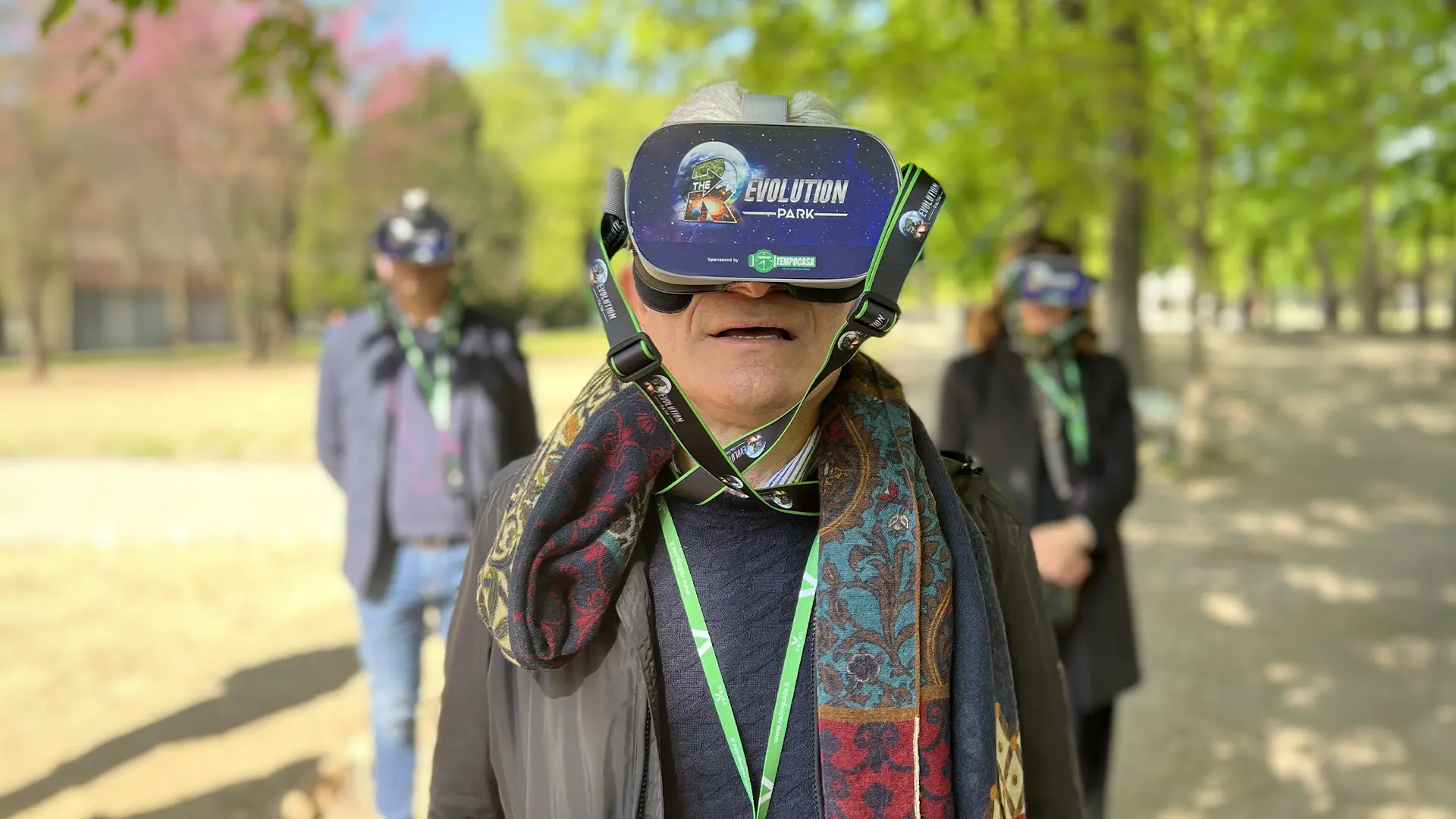
As immersive technology matures, more organisations are moving beyond ready-made content towards experiences built specifically for their objectives. A tailor-made VR experience — sometimes called a bespoke or custom VR experience — is designed from the ground up around a particular brand, message or audience, rather than adapted from an existing template. For corporate clients evaluating their first immersive project, understanding what this means in practice is the key to making the right decision. This guide explains the concept, when it makes sense and how such a project comes to life. The stakes of this decision are higher than they first appear. An immersive project is both an investment and an opportunity: chosen well, it becomes a lasting strategic asset; chosen without understanding, it can disappoint. This guide is written for that decision point — for the leaders and managers weighing their first serious immersive project who want to understand what they are committing to before they commit.
A tailor-made VR experience is a virtual reality production conceived, designed and built for a single client and a specific purpose. Every element — the narrative, the visual world, the interactions, the duration and the way participants move through it — is shaped by the brief rather than drawn from a catalogue. The result is an experience that exists nowhere else and speaks directly to the organisation’s goals. This stands in contrast to off-the-shelf immersive content, which is produced once and licensed to many users. Ready-made experiences have their place: they are faster and less costly to deploy. But they cannot carry a specific message, reflect a brand identity or address a defined audience the way a custom immersive experience can. The distinction is essentially the same as that between a template and a commissioned piece of work. Tailoring applies at every level of the experience. The narrative is written for the client’s message; the visual world is designed to reflect the brand or subject; the interactions are chosen to support the desired outcome, whether that is learning, persuasion or emotion; even the length and pacing are calibrated to the context, be it a busy trade-show floor or an intimate executive session. Nothing is incidental, because everything has been decided in relation to a specific goal. It also helps to distinguish degrees of customisation. At one end, an existing experience may be lightly branded — logos, colours, a custom introduction — which is quick but limited. At the other, a fully bespoke experience is conceived from a blank page. Between the two lies a spectrum, and part of a partner’s role is to identify the point on that spectrum that best balances the client’s objectives, budget and timeline. Understanding where an experience sits on this spectrum also clarifies expectations. A lightly branded experience will feel familiar and is appropriate when speed matters more than originality; a fully bespoke production will feel unmistakably the client’s own and is justified when distinctiveness is the point. Naming this choice explicitly at the outset prevents the most common source of disappointment: expecting a bespoke result from what was, in fact, a lightly customised one.
Not every objective calls for a bespoke production, and an honest partner will say so. A tailor-made VR experience becomes the right choice when the content itself is strategic — when what you want to communicate is unique to your organisation and central to the outcome you are seeking. Typical triggers include launching a product or vision that does not yet exist physically, training teams on processes specific to the company, creating a brand activation that must stand apart from competitors, or marking a milestone in a way that reflects the organisation’s own story. In each of these cases, generic content would dilute the message. The investment in a custom project is justified precisely because the experience must do something that no existing one can. It is equally important to recognise when a bespoke project is not the answer. If the objective is simply to entertain, or to offer a taste of virtual reality without a specific message, a high-quality ready-made experience will serve perfectly well and free budget for other priorities. A trustworthy partner helps you make this distinction honestly, recommending custom work only where it genuinely adds value rather than treating every brief as a bespoke opportunity. A further consideration is ownership. A bespoke experience is an asset the organisation owns and can reuse — at subsequent events, across markets, or as the basis for future iterations. Unlike a one-off licence, a custom production continues to deliver value over time, which often changes the way the initial investment should be assessed: not as the cost of a single event, but as the creation of a durable, reusable asset.
Choosing between ready-made and bespoke comes down to a clear-eyed reading of objectives, budget and timeline. Off-the-shelf experiences suit situations where the goal is broad engagement or entertainment and the content need not be specific to the organisation. They are quicker to arrange and easier to budget. A bespoke immersive experience, by contrast, suits situations where the experience must carry meaning that is unique to the client — a defined message, a particular brand world, a measurable behavioural or learning outcome. It requires more time and a larger investment, but it delivers an asset that is genuinely owned by the organisation and aligned to its strategy. The most useful question to ask is therefore not which option is better, but which one matches the result you actually need. Cost and timeline deserve a realistic framing. A bespoke production involves creative development, design and engineering, and therefore a longer lead time and a higher investment than licensing existing content. For organisations planning a custom experience around a fixed date — a launch, a conference, an anniversary — engaging a partner early is essential, both to allow proper development and to protect quality.
A tailor-made VR experience is built through a structured process that moves from understanding to delivery. It begins with a brief: a deep conversation about objectives, audience and context, which defines what success looks like. From there, a creative concept and a narrative are developed — the story that will hold the experience together — followed by production, in which the virtual world, interactions and audio are designed and engineered. The final stages cover testing, on-site deployment and support, ensuring the experience runs flawlessly with real participants. Throughout, a good partner keeps the client involved, so that the finished experience reflects the brief precisely. The process is collaborative by design, because a bespoke result depends on a shared understanding between client and creator. Two factors determine how smoothly this process unfolds. The first is the quality of the brief: the more clearly objectives, audience and constraints are defined at the outset, the more precisely the experience can be shaped. The second is collaboration during development, with regular review points that let the client steer the work before it is finalised. A bespoke project is not handed over fully formed; it is built together, which is why the relationship with the partner matters as much as their technical skill. Clients sometimes wonder what they themselves need to provide. In practice, the most valuable contribution is clarity and access: a clear sense of the objective, the relevant brand materials, and the availability of the people who can answer questions during development. The creative and technical work rests with the partner, but the raw material — the message, the context, the constraints — comes from the client, which is why early and open collaboration pays dividends in the final result.
The quality of a tailor-made VR experience depends heavily on the partner who delivers it. The right collaborator combines creative storytelling, technical production capability and a track record of bringing complex experiences to life on time and on budget. WAY Experience specialises in exactly this: designing and producing custom immersive projects for organisations across culture, marketing, training and corporate events. When evaluating potential partners, look beyond showreels to evidence of process and delivery: a clear method, a portfolio of completed work, and the ability to handle both creative and technical demands under real-world conditions. Ask how they translate objectives into experiences, how they manage production timelines and how they support an experience once it is live. The answers reveal whether you are dealing with a true experience designer or simply a technology supplier. If you are exploring how immersive formats might serve a specific occasion, our overview of immersive corporate events shows the breadth of what a custom approach can achieve. Ultimately, a tailor-made VR experience is an investment in distinctiveness: in a landscape where audiences are increasingly familiar with immersive technology, what sets an organisation apart is no longer the use of virtual reality itself, but the quality and relevance of the experience built around its own story.
Events, groups and schools
segreteria@wayexperience.it
Custom Projects
aziende@wayexperience.it
Customer care
info@wayexperience.it
Via Pordenone 8
20132 Milan
Italy
WAY Srl | CF e P.IVA 10728950964
Privacy Policy | Cookie Policy | Cookie preferences | Public Grants