
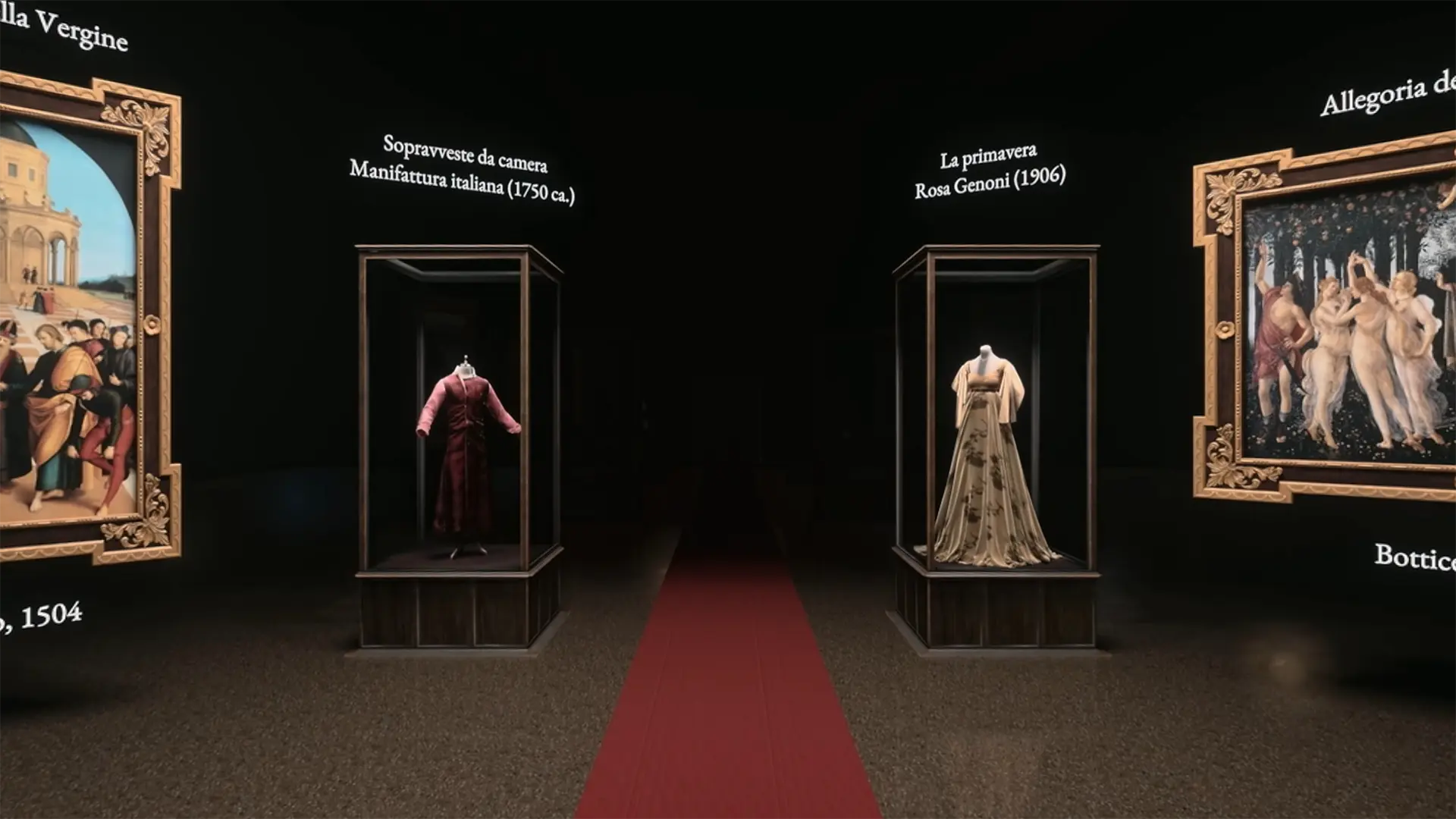
Corporate events have always been about bringing people together — to inform, to celebrate, to align a team or launch a product. Yet the formats that defined them for decades, from keynote stages to networking dinners, are increasingly struggling to hold attention in a world of constant digital stimulation. This is where immersive corporate events come in. By placing virtual reality and immersive storytelling at the heart of the experience, organisations are turning routine gatherings into moments people genuinely remember. This guide explores why the shift is happening, what these events look like and how to design one that delivers measurable impact.
The shift is not merely cosmetic. It reflects a deeper change in what audiences expect from any gathering and in how organisations measure the value of bringing people together. For event managers and communication leaders, understanding it has become part of the core craft of the role.
Attention is the scarcest resource at any corporate gathering. Audiences arrive with high expectations and short patience, conditioned by the richness of the content they consume every day. A static presentation, however polished, rarely competes. Immersive formats change the equation by making attendees active participants rather than passive listeners.
There is also a clear business rationale. Research into experiential engagement consistently shows that information delivered through participation is remembered far longer than information simply heard or seen. For a company investing in a conference, a product launch or an annual celebration, this translates directly into stronger message retention and a more lasting impression of the brand. Immersive corporate events are, in this sense, not a novelty but a more efficient way of achieving the goals events have always pursued.
Recent years have accelerated the change. Audiences grew accustomed to rich digital experiences and, on returning to in-person events, brought higher expectations with them. A gathering now competes not only with other events but with the entire landscape of content people consume daily. Organisations that treat their events as experiences, rather than as schedules of speakers, are the ones that capture and hold attention in this environment.
Finally, there is a competitive dimension. As immersive formats become more accessible, audiences increasingly expect them — particularly younger professionals for whom interactivity is second nature. An organisation that relies solely on conventional formats risks appearing dated, while one that embraces immersion signals innovation and ambition. In this sense, the choice of format has itself become a statement about the brand.
Hybrid and distributed teams add a further reason to rethink the format. When part of an audience joins remotely, a conventional presentation struggles to give everyone the same sense of occasion. Immersive and shared virtual environments can bring dispersed participants into a single space, narrowing the gap between those in the room and those joining from elsewhere — an increasingly relevant advantage for international organisations operating across multiple countries.
An immersive corporate event can take many shapes, but it always shares one principle: the audience is placed inside the story rather than in front of it. Instead of watching a film about a company’s vision, participants might step into a virtual reality environment that lets them explore that vision in three dimensions, walking through a future factory, a redesigned product or a brand world built specifically for the occasion.
In its most advanced form, the experience is free roam: guests move physically through a real space while wearing headsets, exploring a shared virtual environment together, without cables or constraints. The social dimension is preserved — colleagues see and interact with one another — while the content becomes spatial and interactive. Other formats blend the physical and the digital more lightly, using immersive installations, interactive projections or augmented reality alongside a conventional programme. The right configuration depends entirely on the objective and the audience.
It is worth dispelling a common misconception: an immersive corporate event does not require every guest to spend the whole evening wearing a headset. The most effective designs use immersion strategically, as a powerful highlight within a wider programme that still includes the human moments — conversation, food, networking — that make events valuable. Technology serves the experience; it does not replace the gathering.
Consider a concrete scenario. A multinational gathers its European teams for an annual kick-off. Instead of opening with a video about the year ahead, leadership invites everyone, in small groups, to step into a free-roam environment that visualises the company’s three-year strategy as a world to explore — each priority a place to walk through and interact with. Ten minutes later, participants have not watched the strategy; they have experienced it. The conversations over dinner that evening are richer, and weeks later the messages have stuck. That is the difference immersion makes.
Immersive formats prove their value across the full range of corporate occasions. At conferences, they transform the plenary moment into a shared experience that anchors the central message and gives delegates something concrete to discuss afterwards. At product launches, virtual reality allows a company to reveal an offering before it physically exists, or to show its inner workings in a way no demonstration could match.
Celebrations and milestone events benefit too. Anniversaries, awards evenings and team gatherings gain emotional weight when attendees are invited to relive a company’s history or to look ahead together inside an immersive environment. Across all these cases, the common thread is the same: the experience becomes the content, and the content becomes unforgettable.
Internal communication and change management are a further, often overlooked use case. When an organisation undergoes a transformation — a merger, a new strategy, a cultural shift — an immersive experience can make the abstract tangible, letting employees step into the future the leadership is describing. This shared, visceral understanding does more to align a workforce than any slide deck. Recruitment and employer branding round out the picture: at career fairs and graduate events, an immersive stand conveys a culture of innovation more persuasively than any brochure, helping organisations stand out in competitive talent markets such as those of France and Switzerland.
The advantages of immersive corporate events are both immediate and lasting. In the moment, participation drives energy and attention; people lean in rather than reach for their phones. Afterwards, the depth of the experience produces stronger recall of the messages delivered and a more favourable perception of the organisation behind them.
Immersive events are also highly shareable. The novelty and visual richness of the experience generate organic word of mouth and social content, extending the reach of an event well beyond the room. For brands operating across borders — including the demanding French and Swiss markets — this combination of engagement, recall and shareability makes immersive formats a strategic choice rather than a simple upgrade.
These benefits can also be measured, which matters to the finance and procurement functions that scrutinise event budgets. Engagement can be tracked through participation data, recall through follow-up surveys, and reach through social and earned media. Far from being a purely creative indulgence, a well-designed immersive event produces evidence of its impact — a question we examine in detail in our analysis of measuring the ROI of immersive experiences.
Perhaps the most underrated benefit is durability. A conventional event ends when the lights come up; an immersive one continues to live in the stories participants tell. That extended afterlife — in conversation, in social posts, in the way people describe their employer or a brand — is where much of the real value of an immersive corporate event is ultimately realised.
There is, finally, an efficiency argument that resonates with cost-conscious organisations. A single, well-conceived immersive moment can replace several conventional segments of a programme, concentrating impact rather than dispersing it across a long agenda. Used well, immersion is not an added expense layered onto an event but a way of achieving more with a sharper, more focused format.
It is worth stressing that immersion is not an all-or-nothing choice. Many organisations begin with a single immersive touchpoint inside an otherwise conventional programme — an opening sequence that frames the day, or a closing experience that sends people home with a strong final impression. This measured approach lets teams test the format, gather feedback and build internal confidence before committing to a fully immersive event. The most successful immersive programmes are rarely the most expensive ones; they are the ones where the technology is placed precisely where it earns its keep, in service of a clear message rather than as spectacle for its own sake.
Turning these possibilities into a successful event requires more than technology: it requires a partner able to translate business objectives into an immersive narrative. WAY Experience designs bespoke immersive formats for organisations, combining storytelling, creative direction and proven virtual reality production. You can explore our approach to custom immersive projects and learn more about WAY and the experiences we have delivered.
If you are considering an immersive format, the best starting point is a clear objective — engagement, education or brand impact — and a willingness to rethink the traditional event template around it. To understand how a tailored solution is built around your goals, see our guide to the tailor-made VR experience. The companies that move first on immersive engagement are the ones their audiences will remember.
Events, groups and schools
segreteria@wayexperience.it
Custom Projects
aziende@wayexperience.it
Customer care
info@wayexperience.it
Via Pordenone 8
20132 Milan
Italy
WAY Srl | CF e P.IVA 10728950964
Privacy Policy | Cookie Policy | Cookie preferences | Public Grants