The corporate events landscape rarely stands still, and the year ahead looks set to bring significant change. As organisations compete for the attention of employees, clients and partners, the way they gather people is evolving fast. Understanding the trends shaping 2027 helps event planners and marketing leaders stay ahead, designing gatherings that feel current, deliver real value and stand out from the crowd. Here are the developments most worth watching, and what they mean for the events you are planning.
The fundamental shift underpinning every current trend is the move from passive to active. For years, the default corporate event positioned attendees as an audience, there to watch and listen. That model is giving way to one in which participants are expected to take part, contribute and experience. The reasons are clear: attention is harder to hold than ever, and people remember what they do far more than what they are told.
This evolution is being accelerated by rising expectations. Audiences accustomed to rich, on-demand digital experiences in every other part of their lives bring the same expectations to corporate events, and a format that feels dated or one-directional struggles to satisfy them. The most forward-looking organisations have understood that an event is judged not by its scale or budget but by how it makes participants feel — and they are designing accordingly.
It is worth noting that these trends rarely operate in isolation. The most effective events of the coming year will combine several of them at once: an immersive centrepiece that is also personalised to its audience, delivered within a sustainable, partly hybrid framework. Thinking of the trends as a connected toolkit, rather than a menu of separate options, is the key to designing gatherings that feel genuinely contemporary rather than merely fashionable.
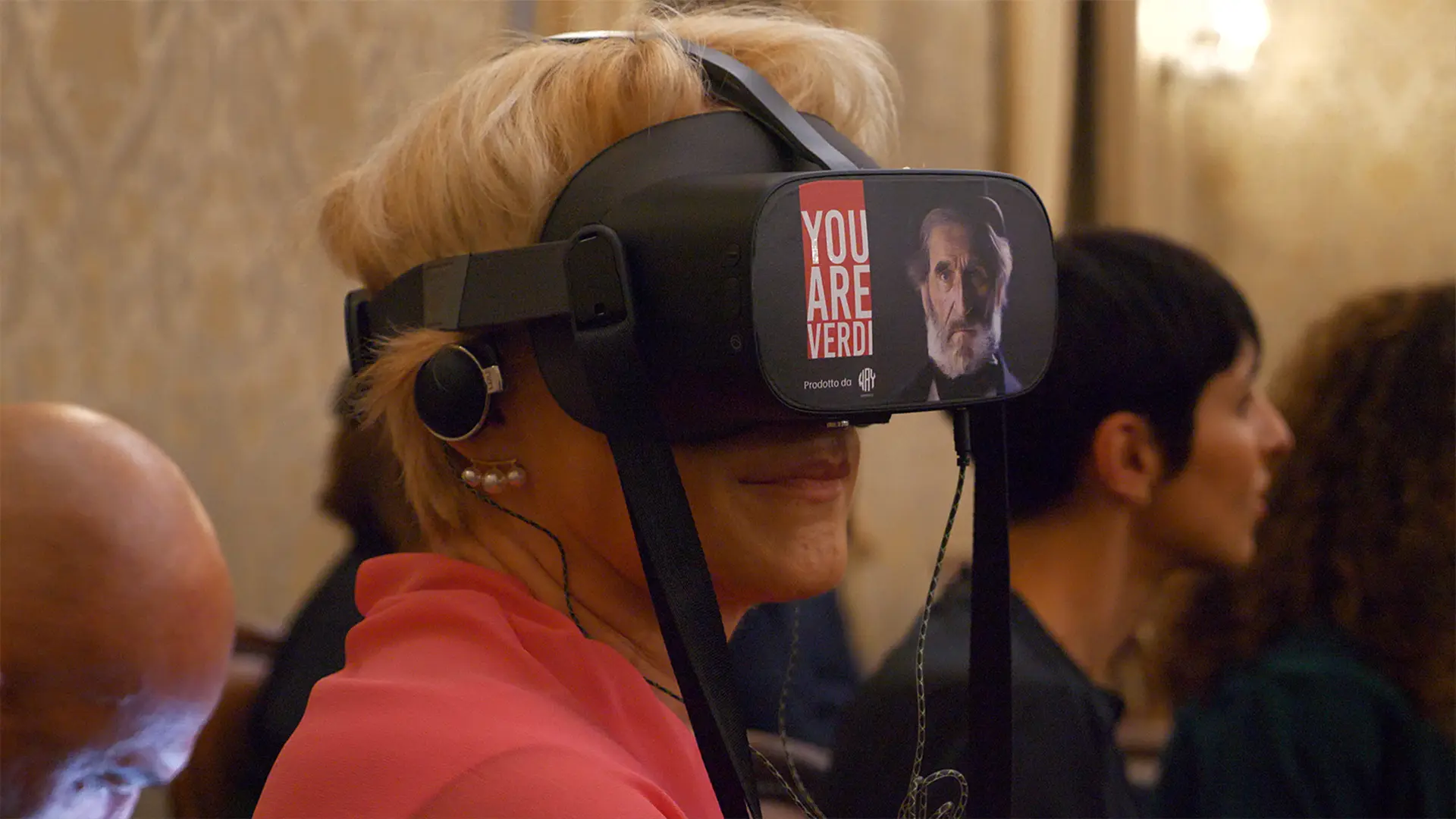
The clearest trend is the continued rise of immersive and experiential formats. Rather than treating technology as a backdrop, organisations are placing experience at the heart of their events, using immersive moments to engage audiences in ways a presentation never could. This is not novelty for its own sake but a recognition that participation drives engagement and recall.
What is changing is not whether organisations use immersive elements but how central they make them. Where an immersive activation was once a bolt-on attraction, it is increasingly the organising idea around which an entire event is built. This shift raises the bar for quality and coherence: audiences are growing more discerning, and a poorly executed experience now disappoints rather than dazzles. The premium, accordingly, is on craft — on experiences that are not merely impressive but meaningful and well integrated with the event’s purpose.
Immersive formats also offer flexibility, adapting to objectives from product launches to team celebrations. We explore the foundations of this approach in our guide to immersive corporate events, which sets out why experience has become the organising principle of the modern gathering. eventi aziendali immersivi, che spiega perché l’esperienza sia diventata il principio organizzativo alla base degli eventi contemporanei.
A second major trend is personalisation. Just as audiences expect tailored content in their digital lives, they increasingly expect events to reflect their interests and needs. This might mean customisable agendas, content adapted to different audience segments, or interactive elements that respond to participants’ choices. The era of the one-size-fits-all event is drawing to a close.
Personalisation is closely tied to engagement. The more an event speaks directly to a participant — acknowledging their role, their interests, their preferences — the more engaged they become. Technology makes this increasingly achievable at scale, allowing even large gatherings to feel personal. Organisations that embrace this shift create events that resonate more deeply and leave a stronger impression than generic, broadcast-style occasions.
Done well, personalisation extends across the whole event journey, not just the day itself. It begins with tailored communications that build anticipation, continues through an experience shaped to the audience’s interests, and carries on afterwards with follow-up content that reflects what each participant engaged with. This continuity transforms a one-off occasion into a sustained relationship, and it is increasingly what distinguishes a memorable event from a forgettable one. The organisations that invest in understanding their audiences are the ones whose events feel genuinely relevant.
Sustainability has moved from an afterthought to a central consideration in event planning. Organisations are increasingly mindful of the environmental impact of travel, materials and waste, and they expect their event partners to share that concern. This is prompting a rethink of how events are designed, with a focus on reducing footprint without diminishing impact — and, often, on concentrating value into fewer, more meaningful occasions.
Closely related is the continued evolution of hybrid models that blend in-person and digital participation. While the unique value of gathering physically is widely recognised, hybrid elements extend reach and inclusivity, allowing those who cannot attend in person to take part. The challenge — and the opportunity — lies in designing hybrid experiences that feel cohesive rather than compromised, giving both audiences a genuine sense of involvement.
Sustainability and immersive technology can also reinforce one another in unexpected ways. A virtual experience can transport an audience to a place or scenario that would be impractical, costly or environmentally damaging to reach physically, achieving impact without the footprint. Used thoughtfully, immersive formats allow organisations to be both more ambitious and more responsible at once — a combination that resonates strongly with the values audiences increasingly expect the brands and employers they engage with to uphold.
Staying ahead of these trends calls for a partner attuned to where events are heading. WAY Experience works with organisations to design forward-looking immersive experiences, from concept and storytelling through to production and on-site delivery. You can explore our approach to custom immersive project to see how a future-ready experience takes shape.
For organisations in France and Switzerland, Italy’s central location makes WAY a convenient partner for events across Europe. The trends shaping 2027 all point in the same direction: towards events that are more engaging, more personal and more meaningful. The organisations that embrace this shift will be the ones whose gatherings people genuinely want to attend — and remember long afterwards.
Events, groups and schools
segreteria@wayexperience.it
Custom Projects
aziende@wayexperience.it
Customer care
info@wayexperience.it
Via Pordenone 8
20132 Milan
Italy
WAY Srl | CF e P.IVA 10728950964
Privacy Policy | Cookie Policy | Cookie preferences | Public Grants