
Employee engagement has become one of the defining challenges for modern organisations. Disengaged employees cost businesses dearly in productivity and turnover, while engaged ones drive performance, innovation and loyalty. Yet many traditional engagement initiatives — surveys, perks and the occasional away day — fail to move the needle. Immersive experiences offer a fresh and surprisingly effective approach, creating the kind of meaningful, memorable moments that genuine engagement is built upon. Here is how, and why, they work.
Study after study paints a sobering picture: in most organisations, only a minority of employees describe themselves as fully engaged. The rest range from indifferent to actively disengaged, representing an enormous loss of potential. The causes are varied — poor communication, a lack of recognition, weak relationships with colleagues and managers — but the consequences are consistent: lower productivity, higher absence and greater staff turnover.
What is striking is how poorly conventional remedies perform. Pay rises and perks produce only short-lived improvements, and engagement surveys, while useful for diagnosis, do nothing on their own to change how people feel. Genuine engagement is emotional rather than transactional: it grows from a sense of belonging, purpose and connection. This is precisely the territory in which experiences, rather than incentives, prove their worth.
The landscape has grown more complex still with the rise of hybrid and remote working. Many employees now spend less time physically together, which erodes the informal bonds that once formed naturally around the office. The casual conversations, shared lunches and spontaneous collaboration that built connection have become rarer, and organisations can no longer rely on proximity alone to foster a sense of team. Creating deliberate, meaningful moments of connection has therefore moved from a nice-to-have to a genuine strategic necessity.
There is a well-established principle in behavioural research that experiences create more lasting satisfaction than material rewards. A bonus is quickly absorbed into expectations; a shared, meaningful experience is remembered and retold. The same logic applies within organisations: the moments employees recall most fondly are rarely the perks, but the times they felt part of something, achieved something together or were genuinely surprised and valued.
Experiences also build the social bonds that underpin engagement. People feel connected to an organisation through their relationships with colleagues, and shared experiences are the most powerful way to forge those relationships. An immersive experience, by creating a vivid moment that a group lives through together, generates exactly the kind of shared memory that strengthens belonging — something no individual perk can replicate.
There is a further, subtler benefit. When an organisation invests in a thoughtful, well-crafted experience for its people, the gesture itself sends a message: that the organisation values them enough to create something special. Employees are quick to sense the difference between a token effort and a genuine one. A memorable experience communicates care and ambition in a way that a routine reward never can, and that perception of being valued is one of the strongest drivers of engagement there is.
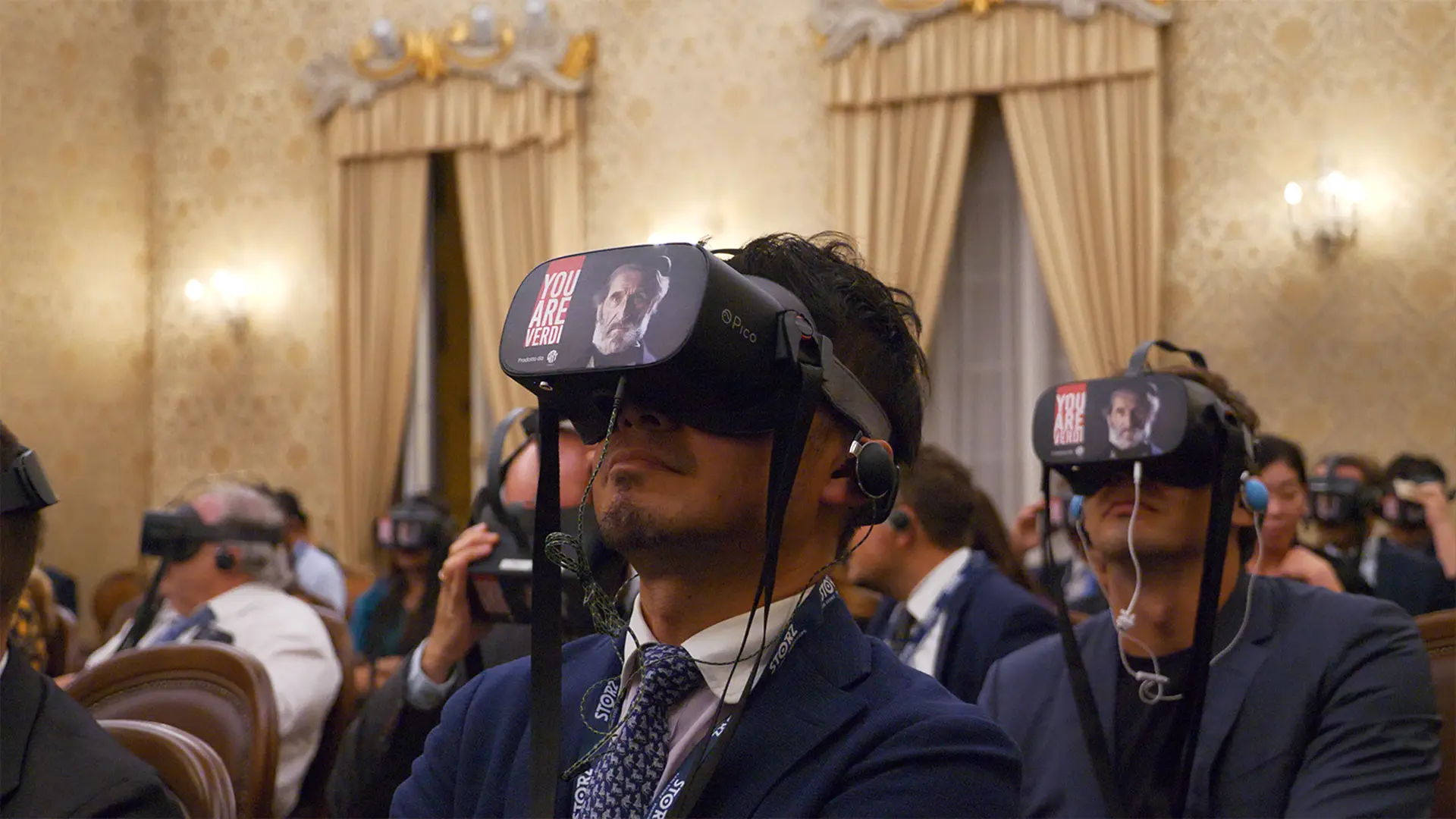
Immersive experiences can support engagement in many forms. A shared virtual adventure can mark a company milestone, turning an abstract achievement into a memorable collective celebration. An immersive storytelling experience can bring a company’s history, values or mission to life far more powerfully than a presentation, helping employees feel connected to a larger purpose.
What unites these formats is that they speak to employees as people, not merely as job-holders. They appeal to curiosity, emotion and the simple human pleasure of a shared, surprising experience. In doing so, they cut through the fatigue that surrounds conventional engagement initiatives and create genuine enthusiasm. An experience that people actually look forward to, talk about afterwards and remember months later achieves what countless well-meaning but forgettable programmes never do: it makes the organisation a place people are glad to belong to.
Collaborative formats, meanwhile, strengthen the bonds within and between teams. These overlap closely with team building, a subject we explore in detail in our guide to VR team building. The common thread is that each format creates an active, shared experience rather than a passive message — and it is participation that engagement depends upon. VR team building. Il filo conduttore è sempre lo stesso: ogni format crea un’esperienza attiva e condivisa invece di trasmettere un messaggio passivo, perché il coinvolgimento nasce prima di tutto dalla partecipazione.
Engagement begins on an employee’s first day, and immersive experiences have a valuable role in onboarding. A well-designed immersive induction can introduce new joiners to a company’s culture, history and values in a way that is engaging and memorable, helping them feel they belong from the outset. For organisations recruiting at scale, this also ensures consistency across every new cohort.
Beyond onboarding, immersive moments can enrich internal events of all kinds — annual gatherings, town halls, recognition ceremonies and milestone celebrations. Used as a highlight, an immersive experience lifts these occasions above the routine, giving employees something to anticipate and to remember. Over time, a series of such moments contributes to a culture in which people feel seen, connected and proud of where they work.
The benefits of engagement, moreover, extend well beyond the individuals involved. Engaged employees become advocates for their organisation, speaking positively about it to customers, candidates and their wider networks. In a competitive labour market, this reputation is a genuine asset, helping attract talent and strengthening the employer brand. An investment in meaningful internal experiences therefore pays back not only in retention and productivity but in the organisation’s standing in the outside world — a return that compounds quietly over time.
An effective engagement initiative is designed around an organisation’s specific culture and objectives, not borrowed wholesale from elsewhere. WAY Experience works with organisations to create bespoke immersive experiences that strengthen engagement, from concept and storytelling through to production and delivery. You can explore our approach to custom immersive projects to see how a tailored experience is built around your people. to custom immersive projects per scoprire come un’esperienza su misura viene costruita intorno alle persone.
For organisations in France and Switzerland, Italy’s proximity makes on-site experiences easy to arrange. In a world where talent is hard to attract and harder to keep, engagement is no longer a soft concern but a strategic priority — and immersive experiences offer one of the most powerful ways to create the connection and belonging that keep people committed.
Events, groups and schools
segreteria@wayexperience.it
Custom Projects
aziende@wayexperience.it
Customer care
info@wayexperience.it
Via Pordenone 8
20132 Milan
Italy
WAY Srl | CF e P.IVA 10728950964
Privacy Policy | Cookie Policy | Cookie preferences | Public Grants