
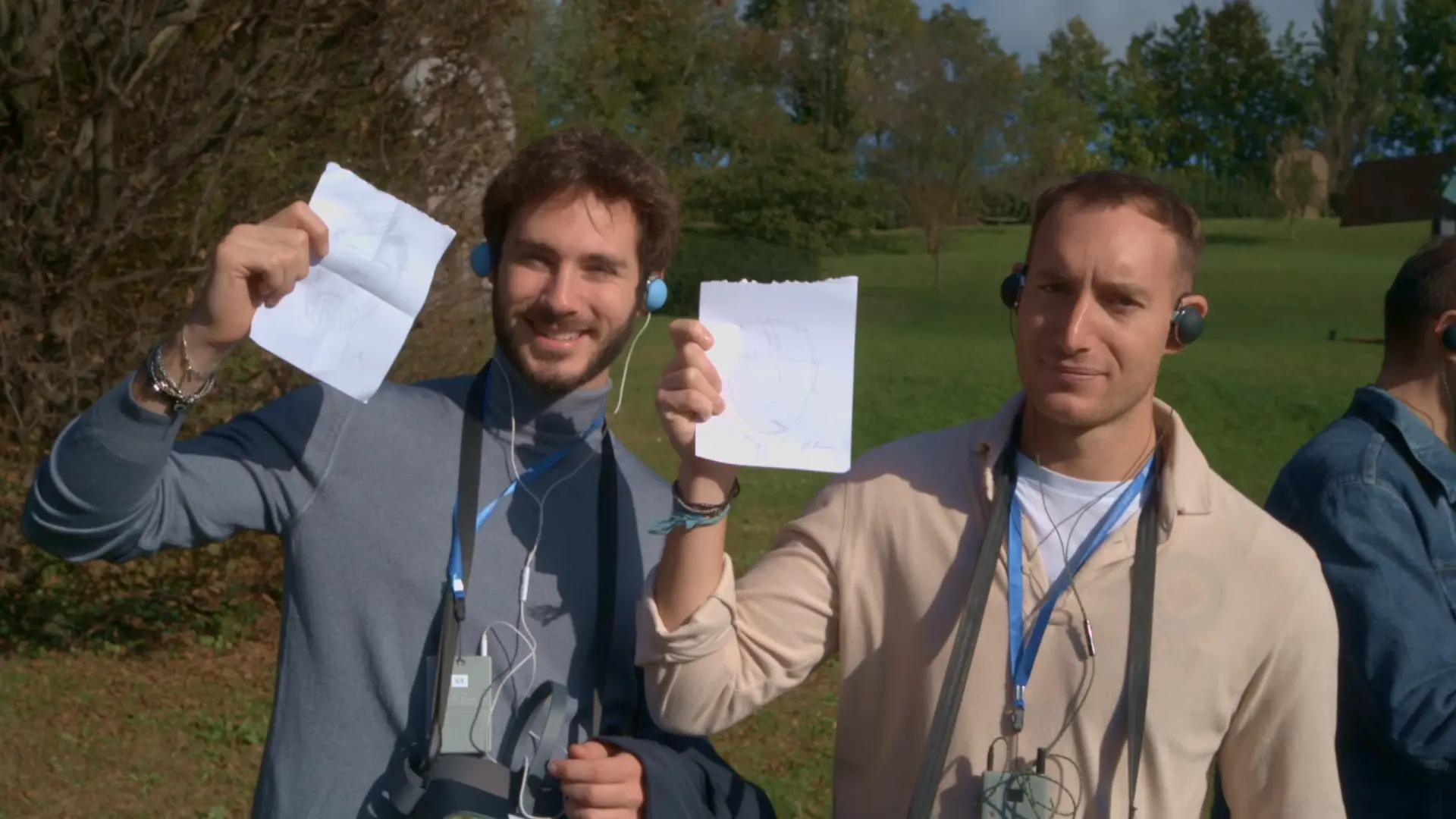
Planning a corporate event has never been more demanding. Audiences are harder to impress, attention is harder to hold, and the pressure to demonstrate a return on every line of the budget has never been greater. As organisations rethink how they gather their people and their clients, one trend stands out clearly: immersive formats consistently outperform conventional ones on the metrics that matter most. This guide sets out how to plan an effective corporate event in 2026, and why immersion has become the format of choice.
Before choosing a format, it is worth defining what success actually means. A corporate event is not successful simply because it runs smoothly; it succeeds when it achieves a clear purpose — strengthening relationships, communicating a message, motivating a team or launching a product. The most common mistake in event planning is to focus on logistics while losing sight of the underlying objective. Genuine success is measured in what participants take away: what they remember, how they feel about the organisation, and what they do differently as a result. An event that is logistically flawless but emotionally forgettable has failed at the only level that counts. This is precisely why engagement and recall — rather than attendance figures alone — have become the true benchmarks of a worthwhile gathering. There is also a human dimension that planners overlook at their peril. People attend corporate events as individuals, not just as employees or clients, and they judge the experience by how it makes them feel. A successful event respects their time, rewards their attention and leaves them with a sense that the occasion was worth attending. When this happens, the goodwill generated extends far beyond the event itself, shaping how participants speak about the organisation long afterwards.
For years the corporate event followed a familiar template: presentations, panels, a dinner and perhaps an external speaker. These formats are not without value, but they share a weakness — they position the audience as passive recipients. In an age of constant digital stimulation, passivity is the enemy of attention, and even the most polished presentation struggles to compete with the distractions in every pocket. Immersive formats reverse this dynamic by making participants active. Rather than watching from their seats, attendees take part in a shared experience that demands their full presence. This is why a growing number of organisations are building immersive moments into their events, a shift we explore in depth in our guide to immersive corporate events. The format does not merely decorate an event — it changes how people experience and remember it.
There is, too, a growing body of evidence behind the shift. Engagement studies consistently show that active, participatory experiences are remembered far longer than passive ones, and that emotional involvement strengthens recall. For organisations spending significant sums on events, this is not a matter of fashion but of effectiveness: an immersive format simply does more with the attention it captures, turning a fleeting gathering into something participants genuinely retain. The key to effective planning is matching the format to the objective. An event designed to motivate a sales team calls for a different approach from one intended to launch a product or to welcome new joiners. Immersive experiences are versatile precisely because they can be shaped around any of these goals: a celebratory experience to mark a milestone, an educational journey to convey a message, or a collaborative challenge to build a team. This adaptability also extends to scale and setting. An immersive moment can serve as the emotional centrepiece of a large conference, the highlight of an intimate executive retreat or a recurring feature of an internal programme. The planner’s task is to identify the single outcome that matters most and to design the experience around it, rather than assembling a programme of disconnected activities in the hope that something resonates. It is worth remembering, too, that an immersive element rarely needs to fill an entire event. Often the most effective approach is to combine a focused immersive moment with the familiar rhythms of a corporate gathering — the networking, the meals, the conversations that matter as much as the formal programme. Placed thoughtfully, a single immersive highlight can lift an otherwise conventional event, giving it a centre of gravity and a story that participants carry away with them.
A few practical principles help ensure an immersive event delivers. Start with the objective and the audience, and let these shape every subsequent decision. Choose a venue that can accommodate the experience comfortably, with adequate space and a smooth flow between activities. Build in time and support so that first-time participants feel at ease, since comfort is essential to immersion. Plan the experience as part of a coherent narrative rather than an isolated novelty: what comes before should prepare the audience, and what follows should reinforce the message. Finally, decide in advance how success will be measured — through feedback, engagement or follow-up action — so that the event’s value can be demonstrated afterwards. Thoughtful planning of this kind is what separates a memorable event from an expensive one. A final word on timing: the earlier an immersive element is considered, the better it can be woven into the wider programme. Treating it as a late addition rarely produces the best result, whereas building the event around a clear immersive idea from the outset allows every other element to support it. Early planning also leaves room for the creative and technical work that a high-quality experience requires, ensuring the finished event feels seamless rather than improvised.
Bringing an immersive event to life calls for a partner who can translate objectives into experience. WAY Experience works alongside event teams, marketing departments and agencies to design bespoke immersive moments, handling concept, production and on-site delivery. You can explore our approach to custom immersive projects to see how a tailored experience is built around your goals. For organisations in France and Switzerland, Italy’s central location makes WAY a convenient partner for on-site events across Europe. As 2026 unfolds, the organisations that stand out will be those that treat their events not as obligations to be endured but as opportunities to create something memorable — and immersive formats are the clearest path to that outcome.
Events, groups and schools
segreteria@wayexperience.it
Custom Projects
aziende@wayexperience.it
Customer care
info@wayexperience.it
Via Pordenone 8
20132 Milan
Italy
WAY Srl | CF e P.IVA 10728950964
Privacy Policy | Cookie Policy | Cookie preferences | Public Grants